
Physical Therapy in South Berwick, ME
Pain doesn't show up out of nowhere, and it usually doesn't leave the same way it came, on its own, with time. Physical therapy works by finding what's actually driving the problem, not just calming down the symptom in front of you, so the results last longer than a few weeks.
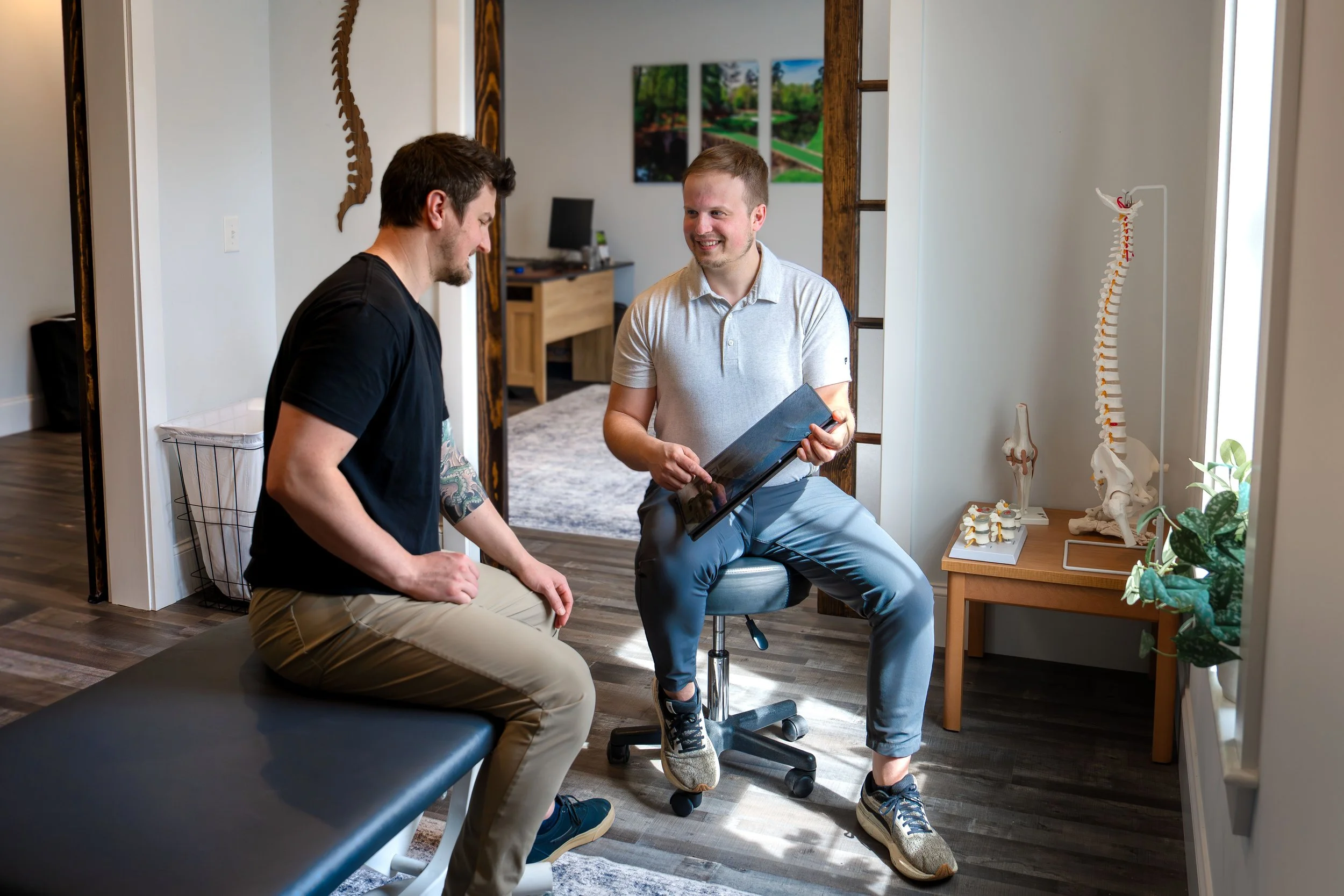
At Back Nine, every session is one-on-one with Dr. Tom Kent, PT, DPT — never handed off to an aide, never split between two patients in the same hour. Because we don't bill insurance, treatment isn't limited by what a claims adjuster will approve. That means longer sessions, a plan built around your goals instead of a standard protocol, and the flexibility to actually solve the problem instead of managing it.
Whether you're dealing with back or neck pain, a stubborn shoulder, knee pain that flares up after activity, or you're trying to get back to golf, running, or lifting after an injury, treatment combines hands-on manual therapy with real strength and movement work — because a body that's only "loosened up" is still a body that will get hurt again the same way.
Frequently Asked Questions
Do I need a referral to see a physical therapist?
No. Maine allows direct access to physical therapy, meaning you can schedule an evaluation without a physician's referral first. If something comes up during your evaluation that needs a physician's input, we'll tell you directly and help coordinate that.
Will my insurance cover this?
Back Nine is a cash-based practice, so we don't bill insurance for any service. What that trades off in insurance coverage, it makes up for in how care actually happens: full one-on-one time with a Doctor of Physical Therapy, a treatment plan that isn't capped by a visit limit, and no fighting with a claims adjuster over what's "medically necessary." Many patients use HSA/FSA funds to cover sessions — [confirm if you want this line included, and whether you provide superbills for out-of-network reimbursement].
What actually happens at the first visit?
The first session is a full evaluation, not a quick once-over. We assess your movement, strength, and mobility, dig into your history and what's actually aggravating things day to day, and identify what's really driving the problem versus what's just the symptom in front of you. You'll leave with a real understanding of what's going on and a specific plan, not a generic handout of stretches.
How is this different from just going to a personal trainer?
A trainer can build you a good program once you're pain-free and moving well. A Doctor of Physical Therapy is trained to figure out why you're in pain in the first place, identify compensations and movement faults a trainer isn't trained to catch, and know when something needs a different kind of care altogether. At Back Nine specifically, you get both: clinical evaluation and the strength/performance training to go with it, from the same person, in the same plan.
How many sessions will I need?
It depends on what you're dealing with and how long it's been going on. A recent, straightforward strain might resolve in a handful of sessions. A chronic issue that's been building for months, or a post-surgical recovery, takes longer and follows more defined benchmarks. We'll give you a realistic expectation after your evaluation, not a one-size-fits-all number, and we'll reassess along the way rather than just running out a package.
Is it normal for exercise to be part of the plan, even if I'm in pain?
Yes, and this is one of the biggest differences between real rehab and just "resting it out." Movement, done at the right intensity, is what actually rebuilds strength and tolerance in the area. Some discomfort during exercise is normal and expected; the plan is built to load you appropriately, not recklessly. If something is genuinely aggravating an issue, that's exactly the kind of thing we adjust for in real time, one-on-one.
Do you treat golfers and athletes differently than general orthopedic patients?
The evaluation approach is the same — find what's actually driving the problem — but the plan reflects your goals. A golfer working through hip pain and a weekend runner working through knee pain both need pain resolved, but they also need to get back to the specific movement demands of what they do. That's built into the plan from day one, not bolted on at the end.
What if I've already tried PT somewhere else and it didn't help?
This comes up more than you'd think. Often it's not that PT "doesn't work," it's that the plan wasn't matched to the actual problem, or the care was too rushed and split across multiple patients to make real progress. A fresh evaluation, one-on-one, with enough time to actually dig into what's going on, frequently turns up something that got missed the first time around.
TMJ & Jaw Pain
Temporomandibular joint (TMJ) issues show up as more than just jaw pain, clicking or popping when you chew, tension headaches, neck tightness, and even ear-adjacent discomfort are common. Because the jaw, neck, and posture are mechanically connected, treating TMJ effectively means looking beyond the jaw itself. At Back Nine, treatment combines jaw mobility work, manual therapy, and postural and neck-focused correction to address what's actually driving the dysfunction, so symptoms resolve rather than just easing temporarily.
Frequently Asked Questions: TMJ & Jaw Pain
What causes TMJ pain?
It's rarely just one thing. Common contributors include jaw clenching or teeth grinding (often stress- or sleep-related), poor posture that pulls the jaw out of its natural alignment, muscle tension in the jaw and neck, and joint mobility restrictions in the TMJ itself. Because the jaw doesn't work in isolation, treatment starts by figuring out which of these is actually driving your specific symptoms.
Can physical therapy really help jaw pain, or do I need to see a dentist?
Both can play a role, and they're not mutually exclusive. Dentists address structural and bite-related issues (like fitting a night guard for grinding). Physical therapy addresses the muscular, joint mobility, and postural factors contributing to pain, which is often the bigger piece for people whose main symptoms are tension, clicking, or restricted opening rather than a bite alignment problem. Many people see the best results combining both.
Why would a physical therapist look at my neck and posture for a jaw problem?
The jaw, neck, and upper back function as a connected system. Forward head posture, common with desk work and phone use, changes the resting position of the jaw and increases strain on the muscles that control it. Treating only the jaw while ignoring posture and neck mechanics tends to produce temporary relief that doesn't hold.
What does treatment actually involve?
A combination of hands-on manual therapy to the jaw and neck muscles, jaw mobility and motor control exercises, and postural correction work. If clenching or grinding is a factor, we'll also cover habits and awareness strategies that reduce the load on the joint day to day.
Is jaw popping or clicking always something to worry about?
Not necessarily. Clicking without pain or restricted movement is common and often not something that needs active treatment. It becomes worth addressing when it's accompanied by pain, locking, restricted opening, or when it's progressively getting worse, those are the signs the joint mechanics need attention.
How long does treatment typically take?
It varies based on how long symptoms have been present and what's driving them. Some people see meaningful improvement within a few sessions, particularly when muscle tension is the primary driver, while more chronic or multifactorial cases take longer. We'll give you a realistic timeline after your evaluation.
Can TMJ issues cause headaches?
Yes, this is one of the more underrecognized connections. The muscles involved in jaw clenching and TMJ dysfunction often refer pain into the temples and around the head, producing what feel like tension headaches but are actually jaw-driven. If you've tried typical headache treatments without success, it's worth having the jaw and neck evaluated as a potential source.