
Dry Needling
Muscle tightness doesn't always resolve with stretching or foam rolling, especially when it's tied to a trigger point: a small, irritated knot within the muscle that keeps referring pain, restricting motion, or flaring back up no matter how much you stretch around it.
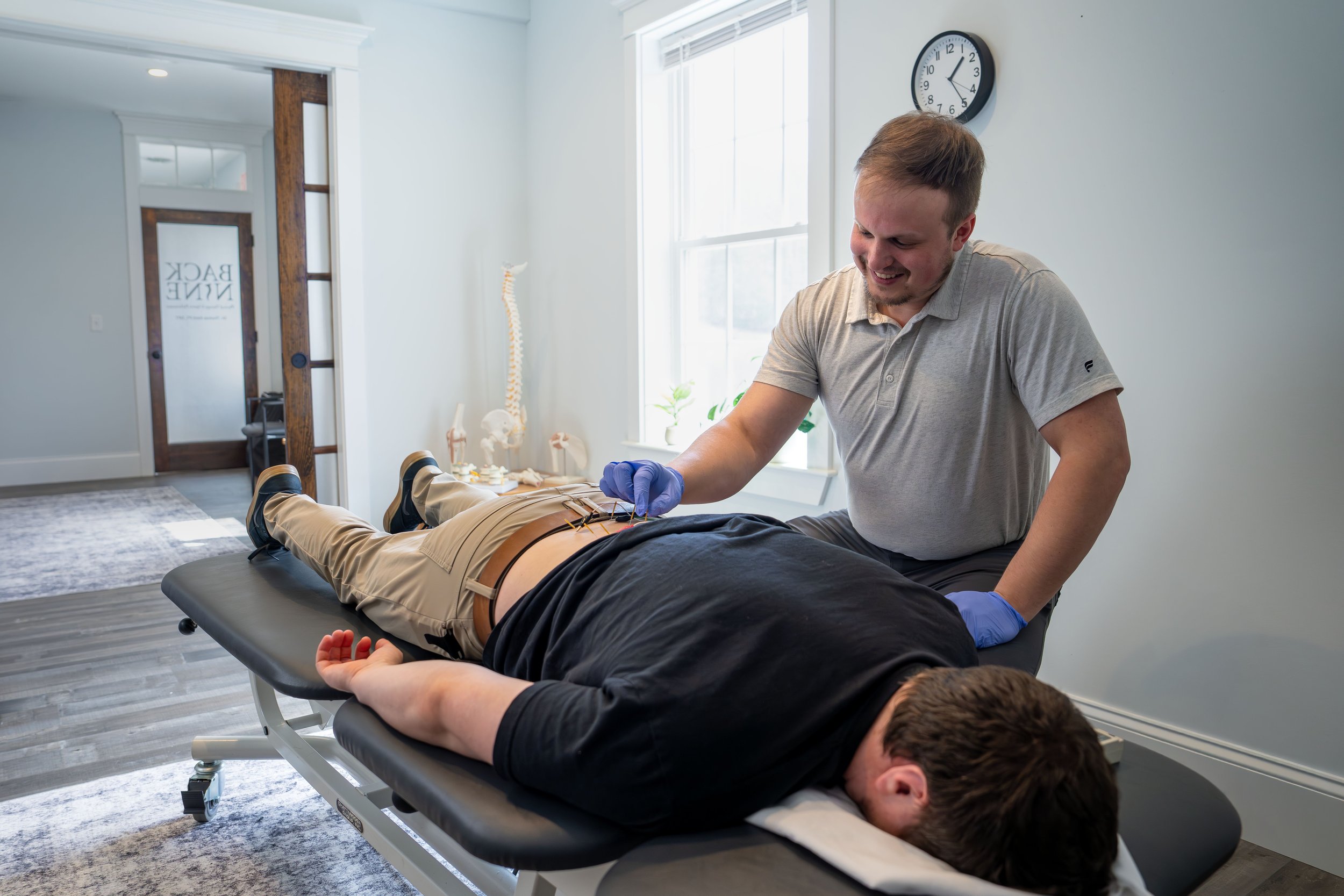
Dry needling targets that trigger point directly. A thin, sterile needle is inserted into the muscle to release the tension at its source, something manual therapy and stretching alone often can't fully reach. Dr. Tom Kent is certified in dry needling and uses it as one tool within a broader treatment plan, not a stand-alone fix, so the relief it creates gets reinforced with the exercise and movement work that keeps it from coming back.
Whether it's a persistently tight calf limiting your ankle mobility, upper trap and neck tension driving headaches, or a stubborn muscle that's been "tight" for months no matter what you try, dry needling is often the piece that finally lets the rest of the plan work.
Frequently Asked Questions
Does dry needling hurt?
Most people feel a brief muscle twitch, cramp, or ache as the needle reaches the trigger point, then a release of tension right after. It's not comfortable, but it's brief, and most people find it very tolerable. Some soreness for a day or two afterward is normal, similar to how a deep massage or hard workout feels the next day.
How is dry needling different from acupuncture?
They use similar-looking needles, but the approach and the reasoning behind it are different. Acupuncture is rooted in traditional Chinese medicine and works with concepts like energy pathways. Dry needling is a Western, evidence-based technique that targets specific muscular trigger points based on anatomy and neuromuscular function. It's a treatment technique within physical therapy, not a separate discipline.
Is dry needling the same as getting a cortisone shot or injection?
No. There's no medication involved. It's a mechanical technique, the needle itself creates a local response in the muscle that releases tension and improves blood flow to the area. There's no medication injected and no downtime like you'd expect from a cortisone shot.
What conditions is dry needling used for?
It's most effective for muscle tightness, trigger points, and tension-related pain, things like chronic neck and shoulder tightness, tension headaches, calf or hamstring tightness, and tendon-related pain when muscle tension is part of what's driving it. It's typically most useful when a specific muscle isn't responding to stretching or manual therapy alone.
Will I feel results immediately?
Many people notice a change in tightness or range of motion right after treatment, sometimes even during the session. That said, dry needling on its own tends to create a temporary window of improvement; pairing it with corrective exercise and strengthening is what makes that change stick rather than reverting within a few days.
How many sessions do I need?
It varies by how long the tightness has been present and how the tissue responds. Some people feel meaningful relief after one or two sessions; more chronic or long-standing tightness usually needs a few sessions worked in alongside the rest of your treatment plan. It's rarely used as a single, isolated visit, it works best folded into an ongoing plan.
Is it safe? Are there people who shouldn't get it?
It's a safe, well-studied technique when performed by a trained and certified clinician. It's not appropriate for certain situations, active infection, particular blood-clotting conditions, pregnancy in certain areas, or over specific medical devices. We'll screen for any of that before ever recommending it.
Can I go straight to work, the gym, or golf after a session?
Usually, yes. Some people feel a bit sore or fatigued in the treated muscle for a day or so, similar to post-workout soreness, so we'll talk through what makes sense for your specific day and what you have planned.